Risk and ethical issues
While Artificial Intelligence offers many benefits, it also raises important ethical and social concerns.
As AI systems become more powerful and widespread, it is essential to reflect on their risks and the responsibilities that come with their use.
Bias and Discrimination
AI systems learn from data created by humans. If the data contains biases or stereotypes, the AI may reproduce or even amplify them.
This can lead to unfair decisions, especially in areas such as hiring, education, or law enforcement.
Privacy and Surveillance
Many AI systems collect and analyze large amounts of personal data. This raises concerns about privacy and the potential misuse of sensitive information.
Without proper regulation, AI could contribute to excessive surveillance.
Job Replacement
Automation powered by AI may replace certain jobs, especially repetitive or manual tasks.
While new job opportunities may emerge, this transition could create social and economic challenges.
Dependence on Technology
Excessive reliance on AI systems may reduce human autonomy and critical thinking.
It is important that humans remain responsible for decisions made with the help of AI.
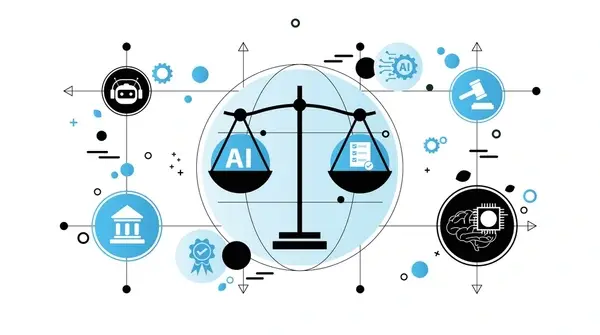
Ethical issues surrounding AI highlight the need for clear rules, transparency, and human oversight.
Artificial Intelligence should be developed and used to support humanity, respecting fundamental values such as fairness, responsibility, and human dignity.
In conclusion, Artificial Intelligence is a powerful tool with great potential.
Understanding how it works, where it is used, and what risks it involves is essential for building a future in which technology serves humanity responsibly.
Crea il tuo sito web con Webador